15 Exotic Tropical Garden Ideas for a Lush Paradise
Want a garden that feels like a tropical paradise right outside your door? 🌿
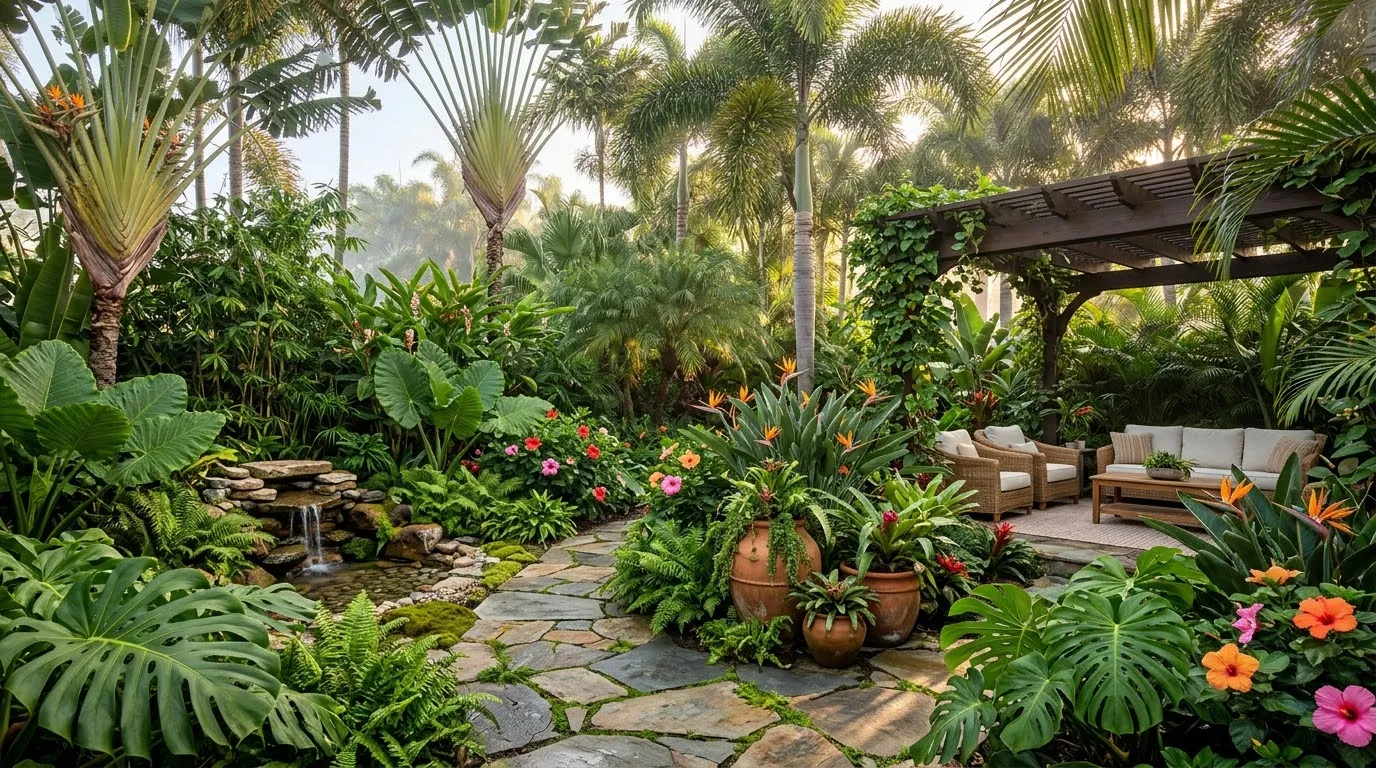
These exotic tropical garden ideas will help you turn an ordinary backyard, patio, or small outdoor corner into a lush, relaxing retreat filled with beautiful greenery and vibrant colors.
From oversized tropical leaves and winding stone pathways to cozy outdoor lounges and magical garden lighting, these designs offer inspiration for creating a space that feels fresh, inviting, and full of personality.
Whether you’re working with a spacious backyard or a modest patio, you don’t need an elaborate landscape to create a tropical atmosphere. I’ve noticed that combining a few bold foliage plants with natural textures and thoughtful placement can make even a simple garden feel special.
Explore these inspiring ideas, discover designs that suit your space, and find practical ways to bring your own little paradise to life.
1. Layered Tropical Foliage
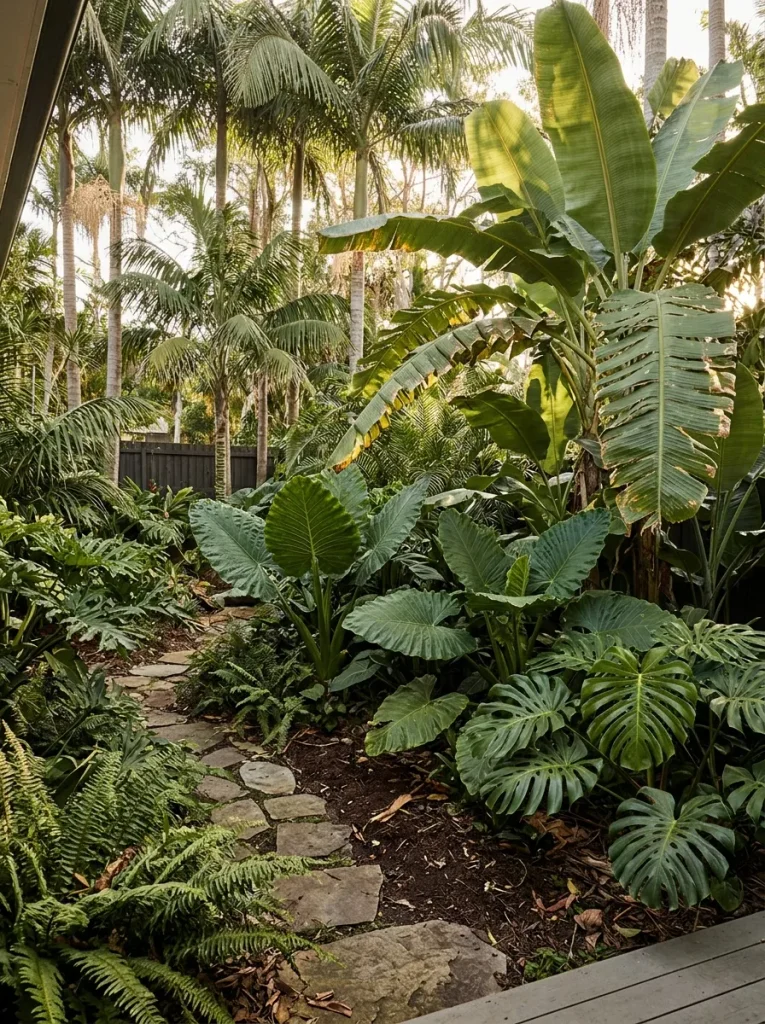
Thick layers of greenery instantly make a garden feel more exotic. Start with tall banana plants or ornamental palms at the back, then add medium-sized elephant ears and philodendrons in the middle. Finish with low-growing ferns and groundcover near the edges.
The secret to a lush tropical look is overlapping foliage rather than filling every space with flowers. Different leaf shapes create natural contrast, while varying heights make even a small backyard feel deeper and more immersive. Choose plants with similar watering needs to keep maintenance manageable.
2. Tropical Stone Pathways
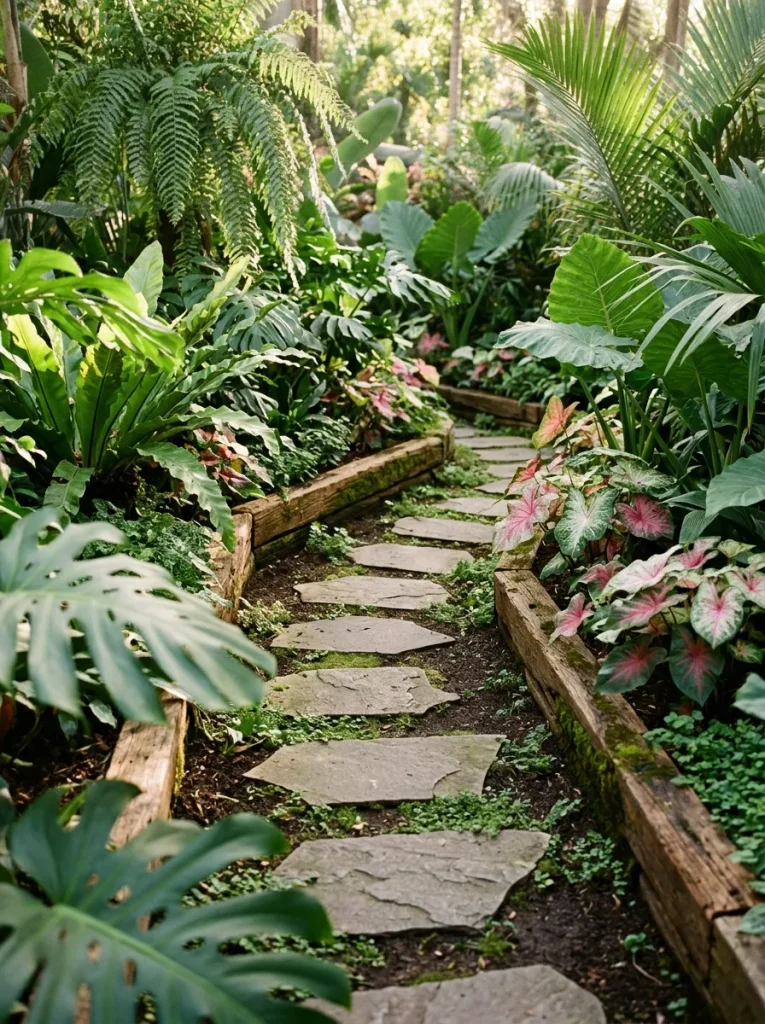
- Choose irregular stones: Natural stepping stones create a relaxed, organic appearance instead of a rigid walkway.
- Leave green gaps: Plant creeping groundcover between stones for a softer tropical finish.
- Add gentle curves: A winding path makes the garden feel larger and encourages exploration.
- Keep stones level: Stable surfaces prevent tripping and make everyday walking comfortable.
A pathway also gives your tropical landscape a clear structure. I’ve noticed that gardens with defined walking routes often feel more intentional, even when the planting is dense. Use larger stones near seating areas and smaller stepping stones through planting beds. Leave enough room for comfortable walking without disturbing surrounding foliage.
3. Exotic Garden Water Features
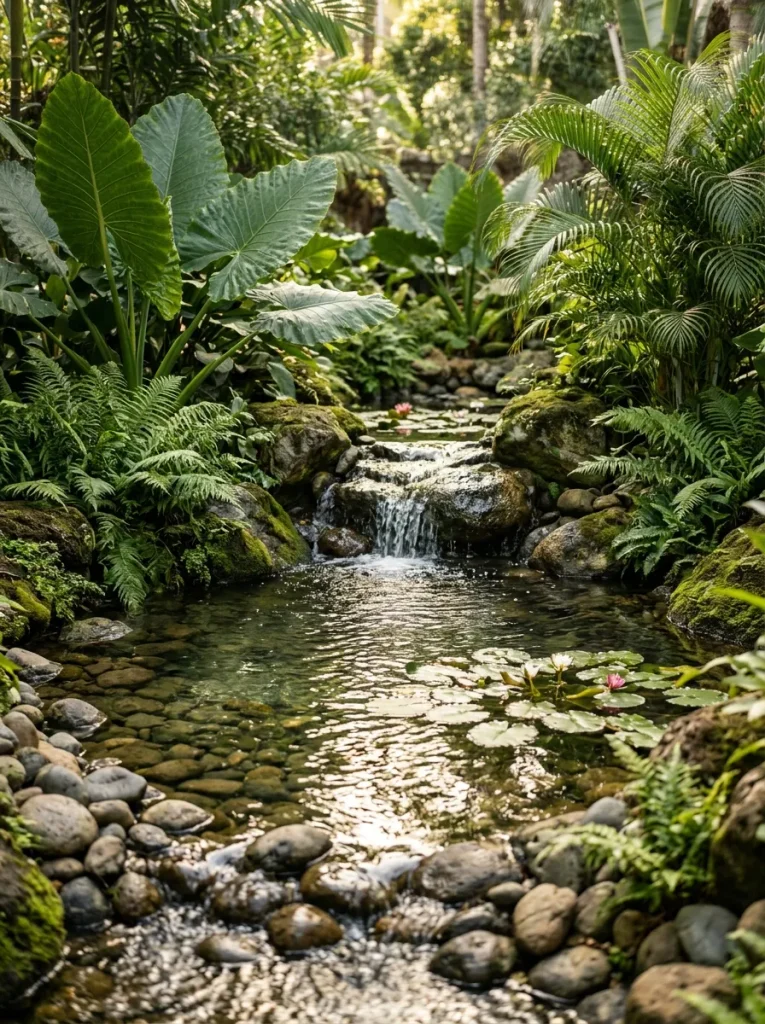
Quick Tip:
Place a small water feature where its sound can reach your seating area. Keep the pump accessible for cleaning, and choose a design with gentle circulation rather than excessive splashing.
A bubbling fountain or compact pond introduces movement into an otherwise still garden. Water reflections also brighten shaded corners, making surrounding foliage appear more vibrant. For a beginner-friendly setup, choose a container fountain with a recirculating pump. Add smooth stones around the base to blend it naturally into your tropical landscaping.
4. Tropical Palm Corners
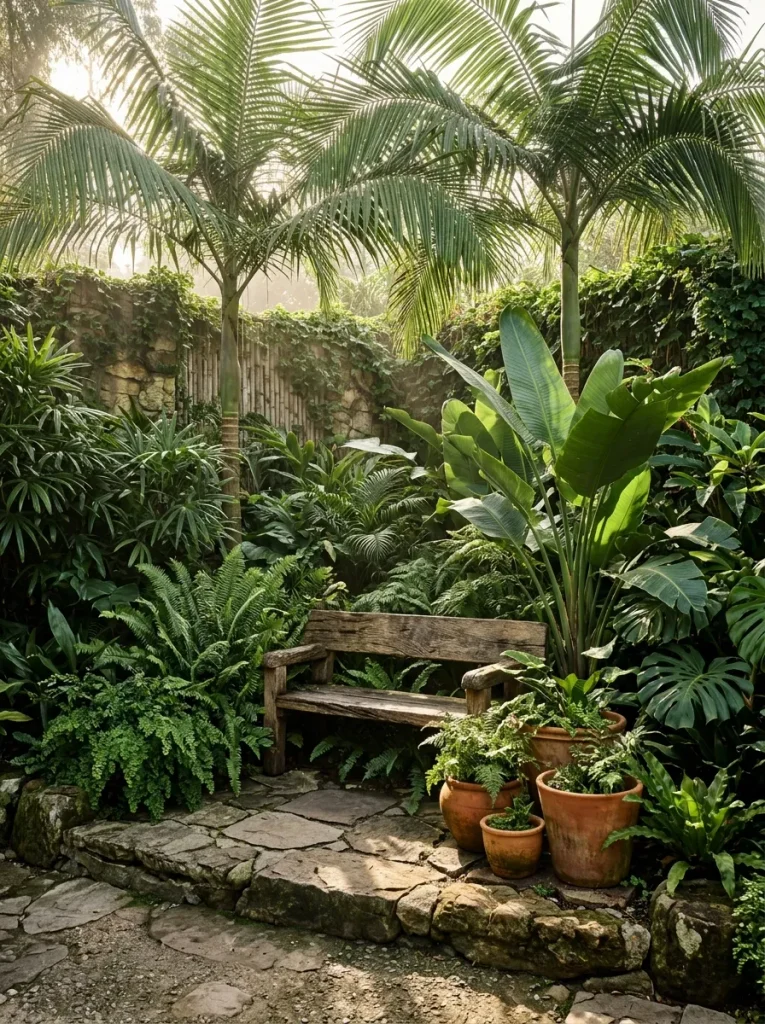
BEFORE
An empty garden corner can feel flat and disconnected from the rest of the landscape. Bare walls, exposed soil, and scattered pots often make the space look unfinished.
AFTER
Tall palms create a natural focal point, while smaller plants fill the gaps beneath them. The corner feels layered, shaded, and visually connected to the surrounding garden.
A palm grouping works especially well beside fences, outdoor seating, or garden entrances. Choose palms suited to your climate and available space. In smaller yards, compact varieties in containers provide the same vertical interest without overwhelming the area. Keep enough clearance for mature fronds to spread naturally.
5. Colorful Tropical Flower Beds
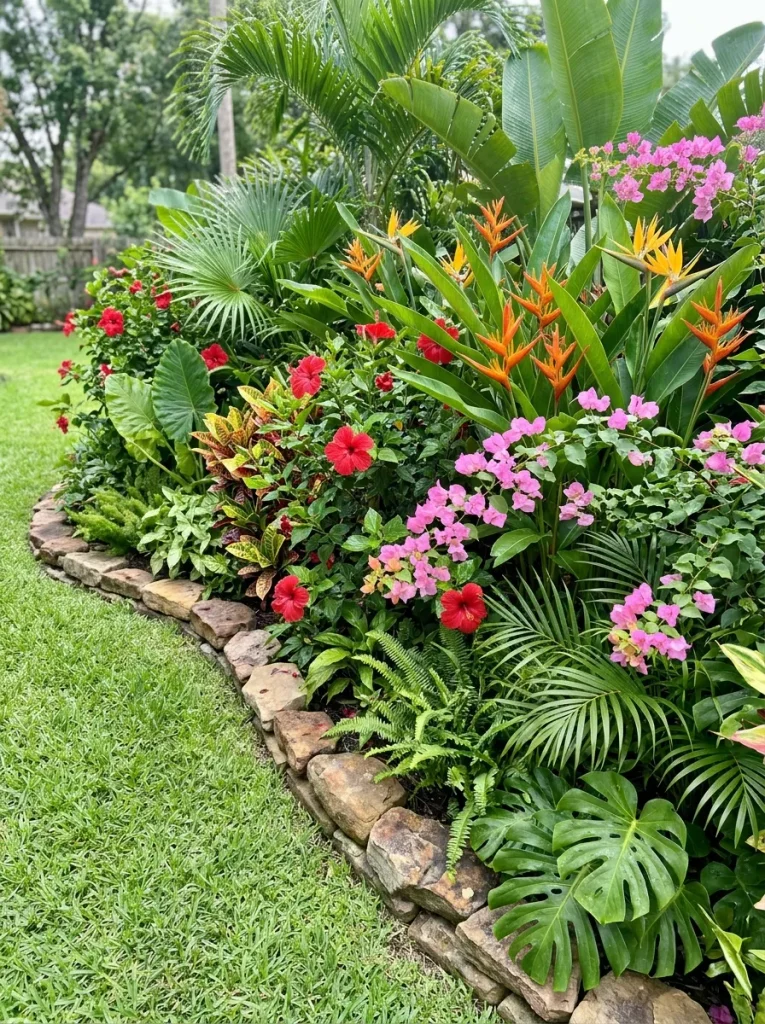
- Choose a color palette: Combine two or three dominant flower colors with plenty of green foliage.
- Plant taller flowers behind: Position heliconia or bird of paradise toward the back of the bed.
- Fill the middle layer: Add hibiscus shrubs and colorful flowering plants.
- Finish with lower plants: Use compact foliage plants to soften the front edges.
- Check sunlight needs: Match each plant to the available light before planting.
Flower beds bring tropical gardens to life with bold splashes of color. Red hibiscus against deep green leaves creates an especially striking contrast, while orange and yellow blooms add warmth. Keep flowering plants grouped in generous clusters rather than scattering individual blooms everywhere. This creates stronger visual impact and makes the garden easier to maintain.
6. Tropical Container Gardens
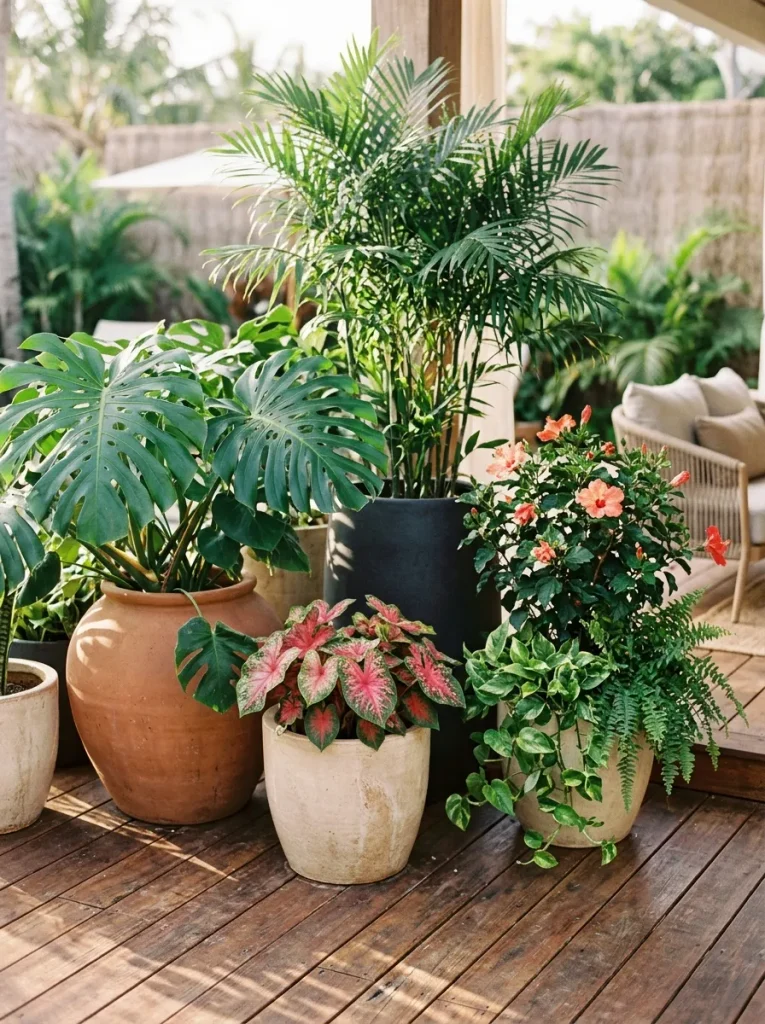
| Option A: Matching Pots | Option B: Mixed Containers |
| Creates a clean, coordinated look | Adds personality and visual variety |
| Works well in modern patios | Suits relaxed tropical settings |
| Easier to arrange symmetrically | Encourages creative grouping |
| Keeps the overall palette consistent | Introduces different textures and colors |
Container planting makes exotic tropical garden ideas practical for patios, balconies, and small yards. Group pots in odd numbers, vary their heights, and combine plants with different leaf shapes. Choose containers with drainage holes and use a suitable potting mix. Move sensitive plants indoors or protect them during cold weather when necessary.
7. Tropical Privacy Screens
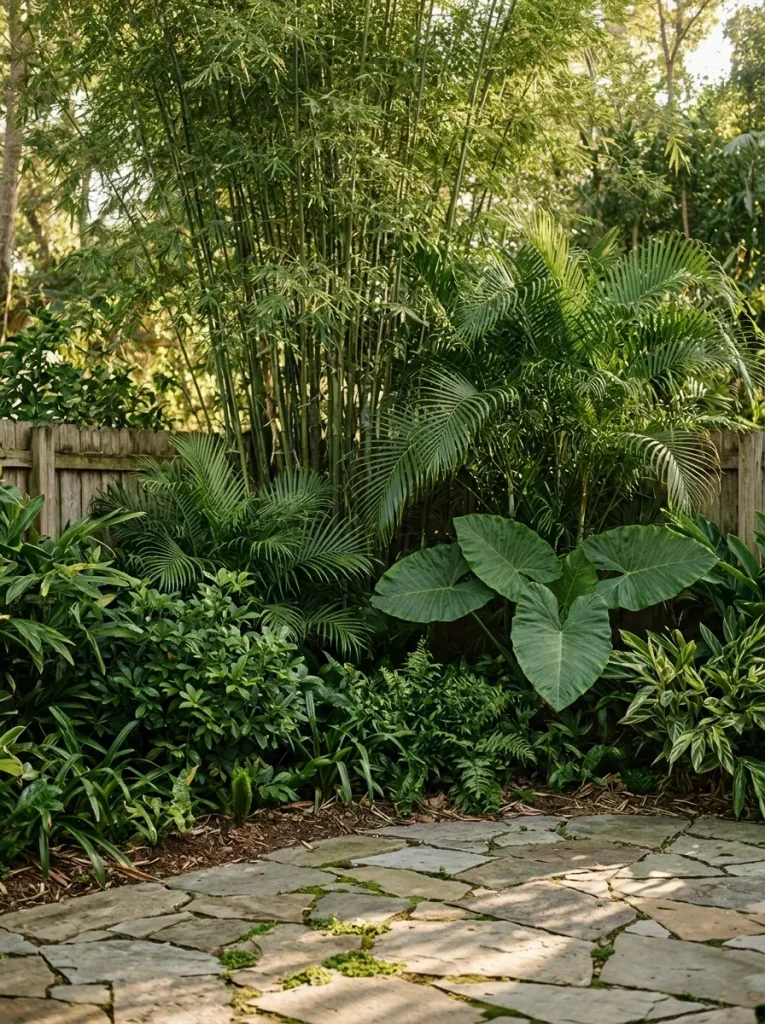
DO:
- Plant tall greenery along exposed fences or property boundaries.
- Combine different leaf sizes for a natural layered screen.
- Leave enough spacing for mature plants to grow comfortably.
- Choose clumping bamboo varieties if bamboo suits your climate.
DON’T:
- Plant aggressive running bamboo without containment.
- Block every breeze with an excessively dense screen.
- Place large palms where their roots or fronds interfere with structures.
- Ignore mature plant heights when planning your layout.
A leafy privacy screen makes a backyard feel more secluded without relying entirely on solid fencing. I’ve noticed that mixing palms with broad-leaf shrubs creates a softer, more natural appearance. For smaller spaces, tall container plants can provide privacy near outdoor seating while keeping the arrangement flexible.
8. Tropical Outdoor Lounge
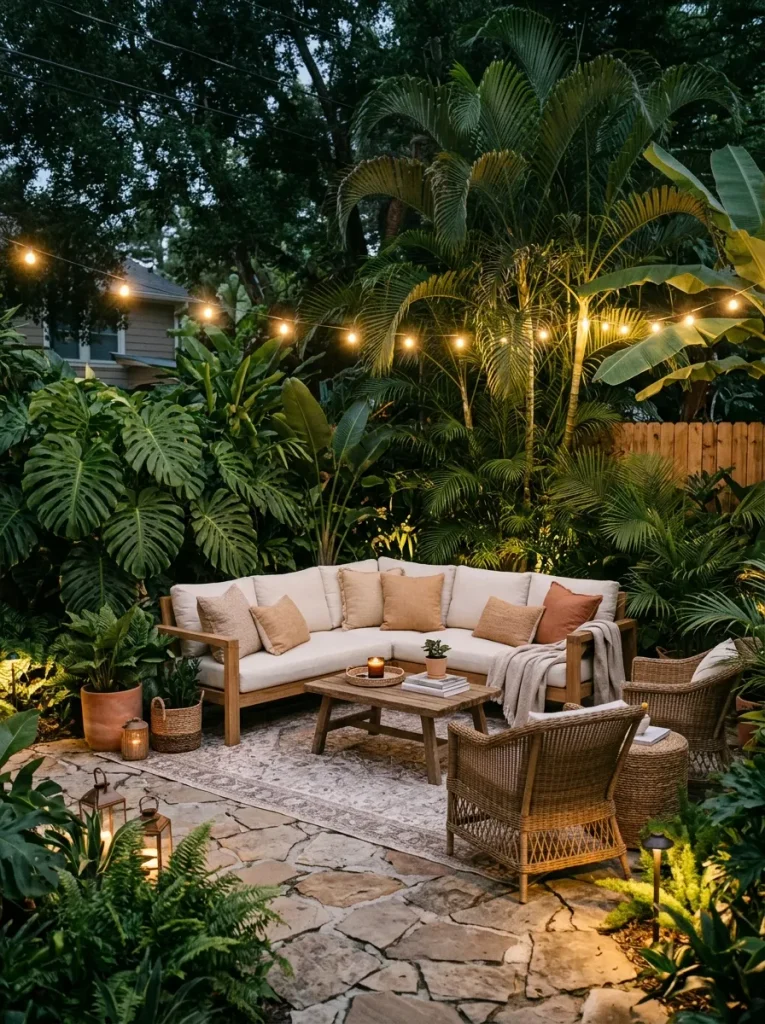
Cost: Moderate to high depending on furniture choices.
Time: One afternoon for arranging furniture and accessories.
Skill Level: Beginner-friendly.
Best For: Patios, shaded garden corners, and spacious balconies.
Result: A comfortable outdoor retreat surrounded by tropical greenery.
A dedicated seating area gives your garden a purpose beyond decoration. Place a sofa or two comfortable chairs beneath a pergola, large umbrella, or natural shade tree. Add weather-resistant cushions in cream, olive, or terracotta. Keep pathways clear and position furniture where you can enjoy the surrounding plants without constantly brushing against foliage.
9. Tropical Hanging Gardens
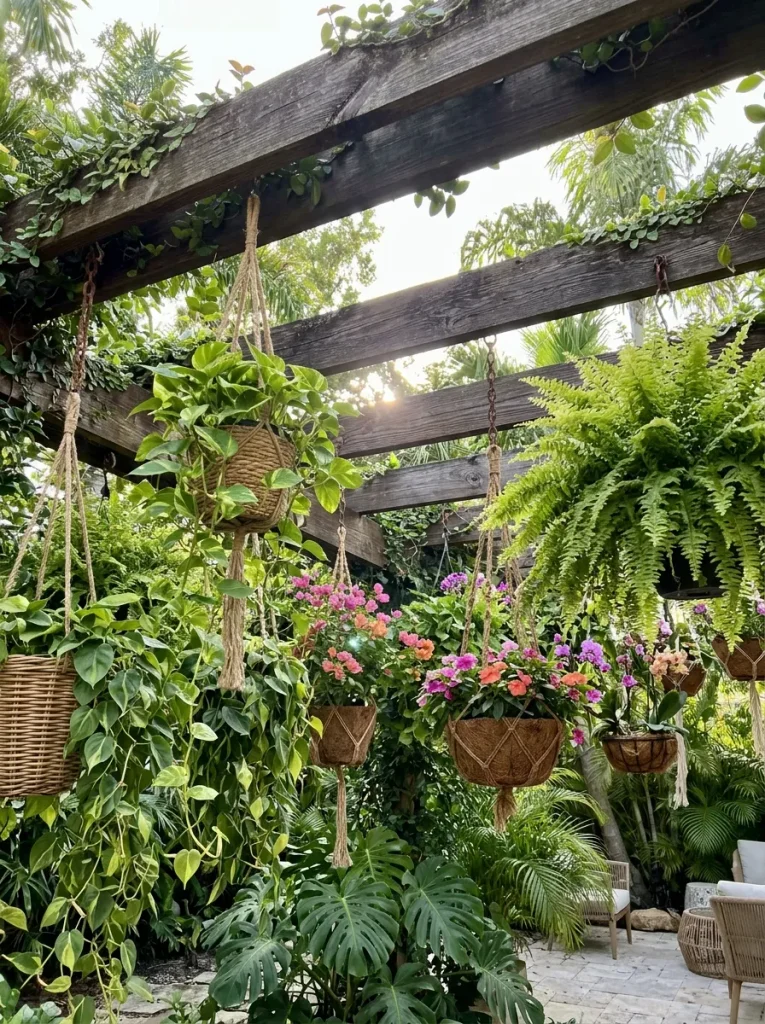
Hanging greenery draws the eye upward and makes unused vertical space feel alive.
Choose sturdy hooks or ceiling-mounted brackets that can support the weight of wet containers. Hang trailing plants at different heights, keeping the longest vines away from walking paths. Pothos and certain philodendrons work beautifully in sheltered locations, while hanging ferns appreciate consistent moisture and suitable humidity.
For an especially lush effect, combine hanging baskets with climbing plants along nearby supports. The overlapping foliage creates a fuller canopy without taking up valuable floor space.
10. Tropical Garden Pergolas
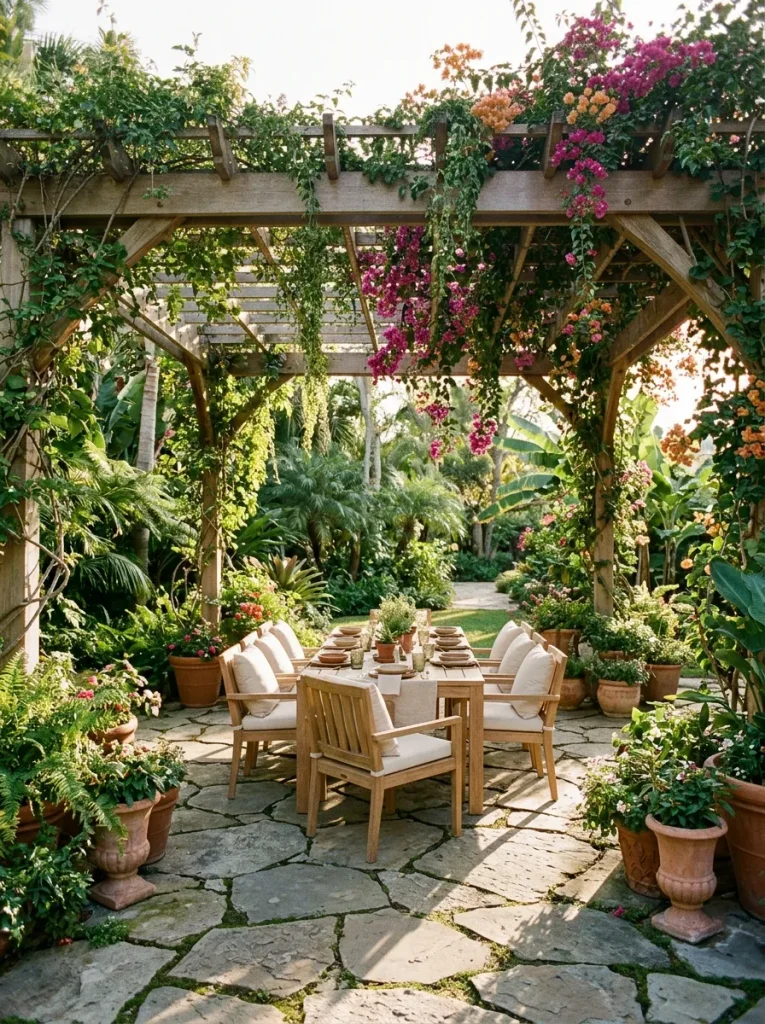
BEFORE
An exposed patio can feel harsh during sunny afternoons. Bare overhead space offers little shade, while surrounding plants may seem disconnected from the seating area.
AFTER
A leafy pergola creates a shaded retreat with a natural tropical canopy. Climbing plants soften wooden beams, and the filtered light makes the patio feel more intimate.
Choose a sturdy pergola designed for the weight of mature vines. Bougainvillea works beautifully in sunny climates, while suitable climbing foliage can provide greener coverage. Keep vines trimmed around entrances and seating areas so the structure remains comfortable and safe.
11. Exotic Leaf Borders
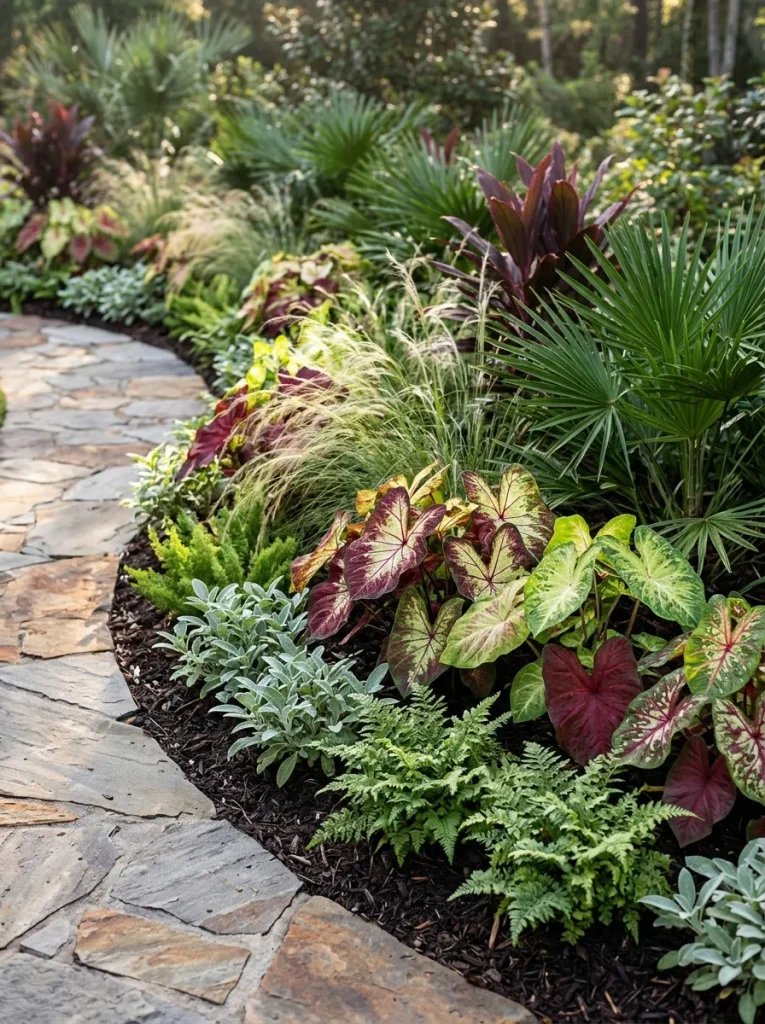
- Mark the border: Outline a curved planting bed along a pathway, fence, or lawn.
- Choose contrasting leaves: Combine broad caladium leaves with narrow grasses and delicate ferns.
- Plant in repeating groups: Use clusters of three or five plants for visual rhythm.
- Add a clean edge: Finish with natural stone edging or a neat mulch boundary.
Leaf borders bring continuous color to tropical gardens, even when flowering plants are not blooming. In my experience, repeating a few foliage varieties creates a more organized appearance than mixing too many unrelated plants. Choose contrasting leaf colors and shapes, then repeat them along the border for a cohesive design.
12. Tropical Garden Lighting
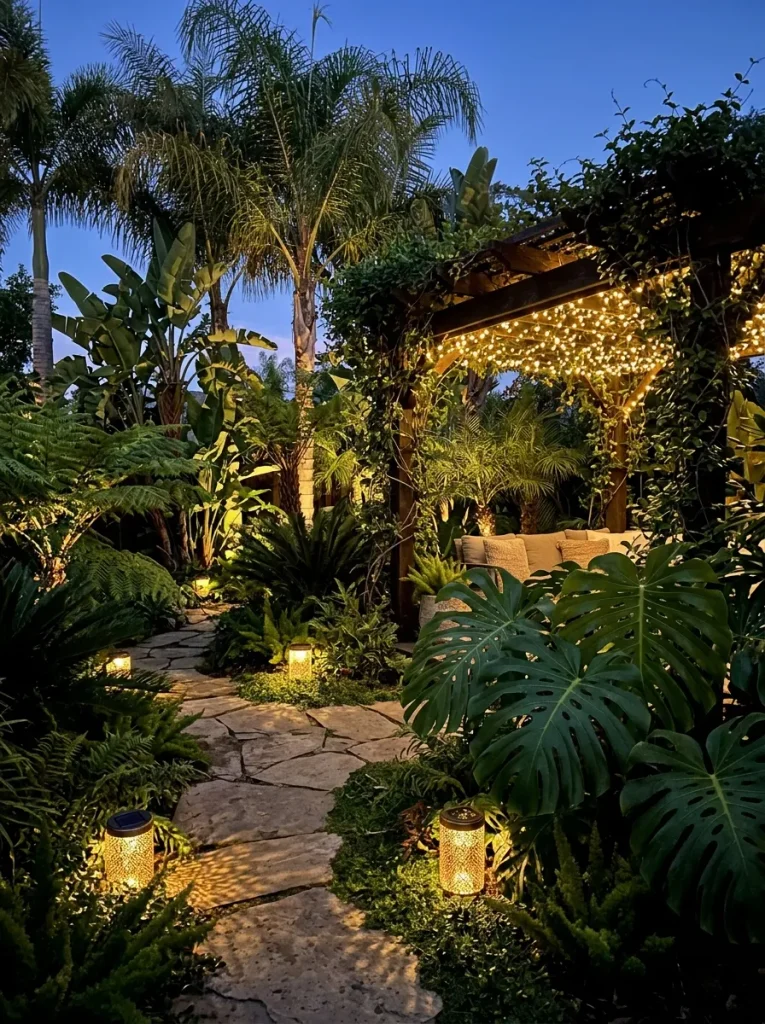
| Option A: Path Lighting | Option B: Plant Uplighting |
| Illuminates walking routes | Highlights palm trunks and foliage |
| Improves nighttime visibility | Creates dramatic garden shadows |
| Best along stepping stones | Best near focal plants |
| Uses low, ground-level fixtures | Uses adjustable directional lights |
Thoughtful lighting makes tropical gardens enjoyable after sunset. Start with a few warm-toned fixtures instead of illuminating every corner. Place lights near steps, pathways, and seating areas, then highlight one or two striking plants. Choose outdoor-rated equipment and avoid directing bright beams toward neighboring windows or visitors’ eyes.
13. Tropical Rock Gardens
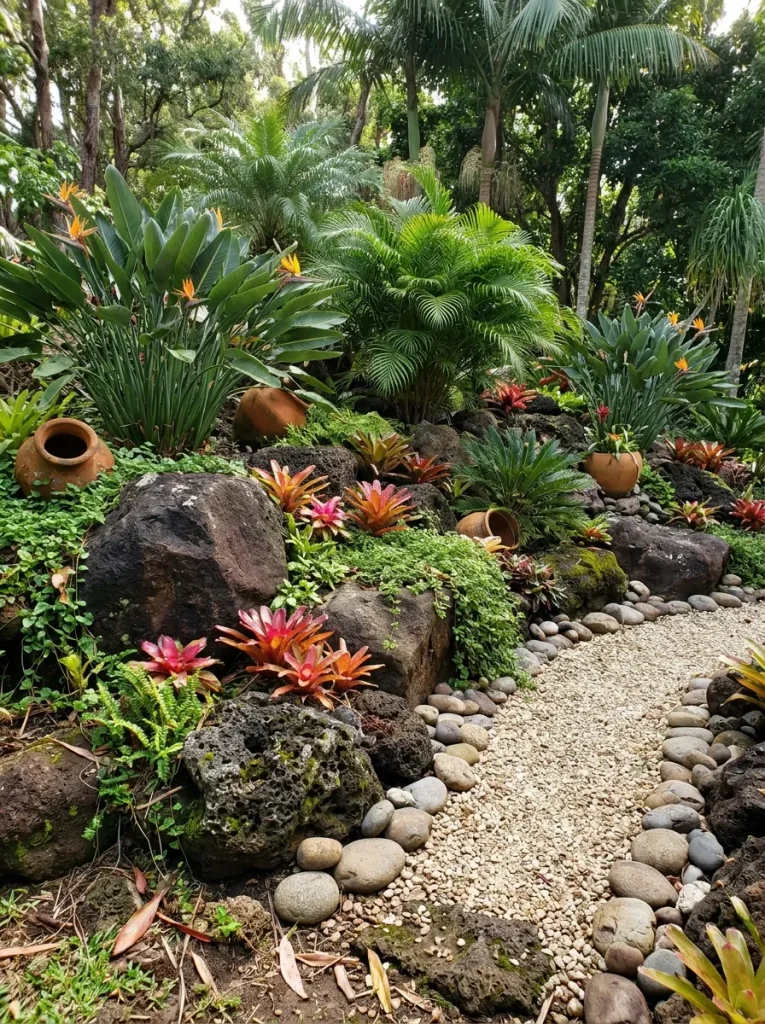
- Arrange the boulders: Position several large stones as natural focal points before planting.
- Add smaller rocks: Fill gaps with river stones and textured gravel.
- Plant around stone edges: Use compact palms, bromeliads, and suitable tropical foliage.
- Soften the arrangement: Add creeping groundcover between selected rocks.
- Finish with mulch: Keep planting areas tidy while protecting soil moisture.
Rock gardens add structure to lush planting beds and prevent the landscape from looking overly crowded. Choose stones in similar earthy shades for a cohesive appearance. Place larger rocks partially into the soil so they look naturally embedded. This design works particularly well in sunny corners where moisture-loving tropical plants would struggle.
14. Tropical Poolside Gardens
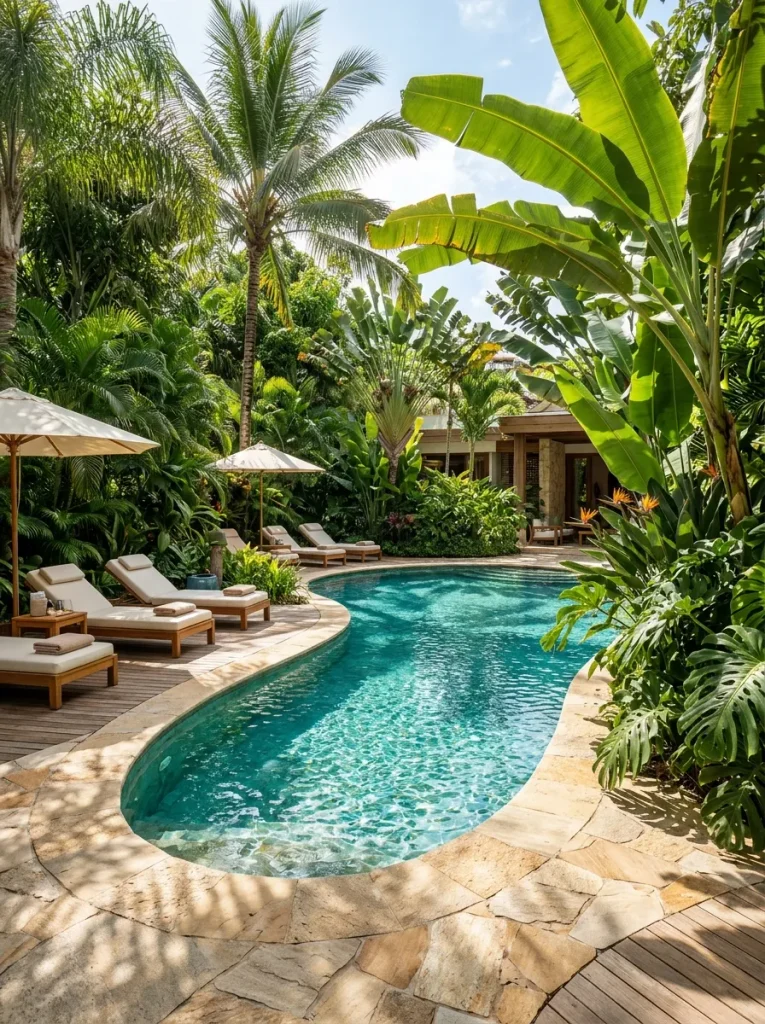
| Option A: Minimal Poolside | Option B: Lush Poolside |
| Uses fewer, carefully spaced plants | Features dense layered foliage |
| Keeps maintenance relatively simple | Creates a stronger jungle atmosphere |
| Highlights clean architectural lines | Softens hard pool boundaries |
| Works well in smaller spaces | Suits spacious pool areas |
A tropical poolside landscape should feel refreshing without creating unnecessary maintenance. Choose plants that tolerate local sunlight and avoid varieties that shed excessive leaves into the water. Keep thorny plants away from walking routes, and leave enough space around pool equipment. Broad foliage and a few architectural palms create a resort-inspired setting.
15. Tropical Garden Archways
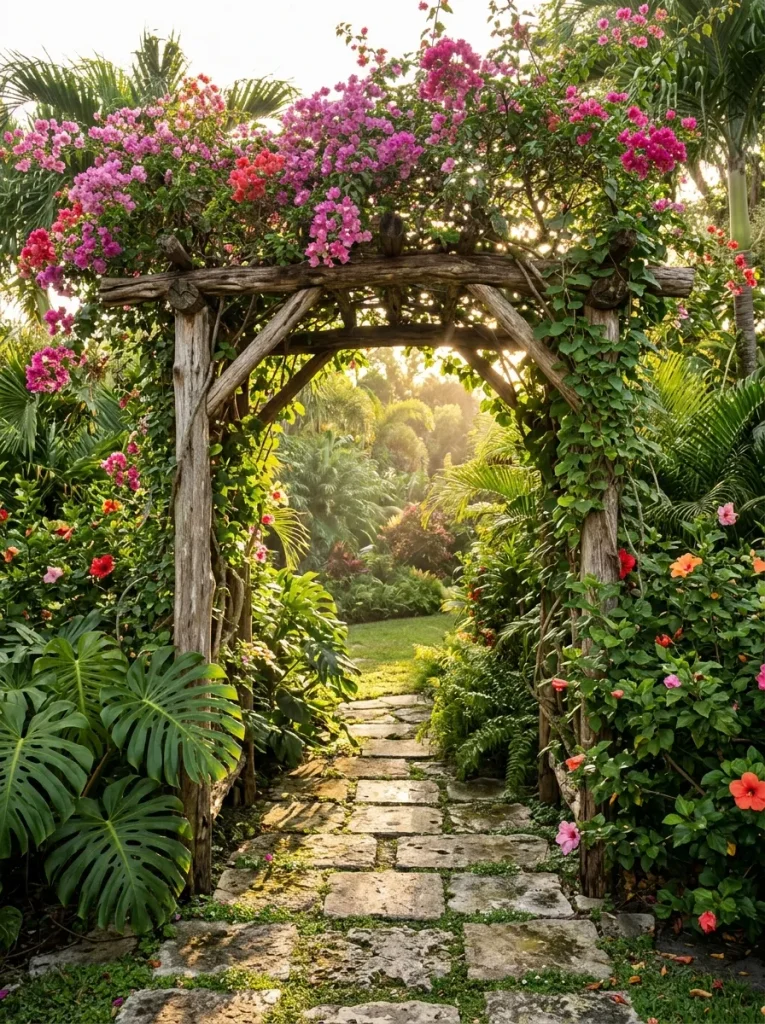
DO:
- Choose a sturdy arch suitable for mature climbing plants.
- Position it at a garden entrance or pathway transition.
- Train vines gradually along the structure.
- Keep the opening wide enough for comfortable passage.
DON’T:
- Use weak supports for heavy mature vines.
- Allow thorny branches to grow into walking space.
- Plant aggressive climbers without checking their growth habits.
- Forget regular pruning around the entrance.
Conclusion
Creating a tropical paradise doesn’t have to mean redesigning your entire garden. Sometimes, a few oversized leafy plants, a charming stone pathway, or a cozy outdoor seating area can completely change how your space feels.
These exotic tropical garden ideas offer plenty of inspiration for creating a greener, more inviting outdoor retreat that reflects your personal style. Start with one idea that catches your eye, choose plants suited to your climate, and build your garden gradually.
Save this article on Pinterest so you can revisit your favorite designs whenever you’re ready to plan. Share it with a friend who loves gardening, and don’t be afraid to experiment. Your little tropical escape can begin with just one beautiful corner.